
• Skip to primary navigation
  • Skip to main content
Zoo Design Architect

CLR Design

-

Dan Gregory

Oregon Zoo & Partners Send 1,600 Endangered Butterflies into the Wild

August 29, 2019 by Dan Gregory

Reposted from the Zoo’s website, July 18, 2019 | Archived Version


Summer is in full swing, and some of the Oregon Zoo’s tiniest residents are headed for the mountains of Oregon’s coastal range.

Throughout the month of July, zoo butterfly conservationists and colleagues from the Oregon Parks and Recreation Department, the U.S. Fish and Wildlife Service, and Seattle’s Woodland Park Zoo will release more than 1,600 Oregon silverspot caterpillars at five sites throughout the temperate coastal mountains in an effort to stabilize declining populations of this threatened species.

The caterpillars began their journey as part of the zoo’s imperiled butterfly recovery program. Each summer, a small number of female silverspots are collected by field biologists and brought to the zoo lay eggs. The eggs hatch into tiny larvae (caterpillars), which are kept safe during their winter dormancy.

In the spring, they wake up to a leafy meal and grow quickly. When the weather grows warmer, the zoo and its conservation partners transport the caterpillars to field sites to bolster the remaining populations.

The release sites are chosen carefully based on the presence of a rare flower — the early blue violet. Early blue violets are the main food source for the silverspot caterpillars as they mature into adult butterflies, and the Oregon coastal range is one of the few remaining areas where early blue violets grow in large enough quantities to sustain a butterfly population.

Listed as threatened under the federal Endangered Species Act, the Oregon silverspot was once common in coastal grasslands from Northern California up into British Columbia. Today, due to habitat loss and the disappearance of its host plant, just four isolated populations remain: three in Oregon and one in California.

“If it weren’t for this recovery effort, it’s likely that three of the remaining silverspot populations would now be extinct,” said Travis Koons, who oversees the Oregon Zoo’s butterfly conservation lab.

Funding for the Saddle Mountain reintroduction project was provided by the USFWS Cooperative Endangered Species Conservation Fund. Additional support is provided by Coffee Creek Correctional Facility, the National Park Service, the North Coast Land Conservancy Trust, Oregon Parks and Recreation, Washington State University, Oregon DOT, Pacific University, The Nature Conservancy, Center for Natural Lands Management and Pelican Brewery.

The Oregon Zoo is a charter member of the Association of Zoos and Aquariums’ Butterfly Conservation Initiative, a collaborative effort among nearly 50 zoos and aquariums. To learn more about the Oregon Zoo’s effort to save Oregon silverspots and other imperiled Northwest species, visit oregonzoo.org/recovery.

Filed Under: Client News, Newsworthy

Dallas Zoo Welcomes Baby Hippo

May 20, 2019 by Dan Gregory

Reposted from the Zoo’s website, May 16, 2019 | Archived Version


The Dallas Zoo is proudly welcoming a Nile hippopotamus calf born Tuesday, May 14, around 6:30 p.m. to 12-year old mom Boipelo after an eight-month-long gestation. Both mom and calf are doing well – labor lasted roughly seven hours, and the calf was observed nursing just two hours after birth. The animal care team was able to observe labor and delivery via the hippo barn’s closed-circuit camera to give mom privacy.

“We timed Boipelo’s contractions every moment she barrel rolled in the water, and after about 100 rolls, we saw a baby emerge,” said Matt James, Dallas Zoo’s Senior Director of Animal Care. “The baby immediately began moving and kicking and Boipelo swiftly nudged it to the ledge of the pool, where the baby sprawled out and took a break. Boipelo has been very attentive, gently nudging the calf to the surface for air after each nursing session. Hippo calves need to come up every 30 seconds to breathe, and she’s doing a great job ensuring the baby is getting everything it needs.”

The zoo’s veterinary and animal care experts have prepared for the calf’s arrival since January, when they first preformed a successful ultrasound on 2,420-pound Boipelo. In 2018, the Dallas Zoo became the first U.S. zoo to capture serial fetal growth images on a pregnant hippo through voluntary ultrasound.

The team performed weekly ultrasounds capturing images of the baby’s heart, chest cavity, head, feet, and other body parts. With very few high quality images of hippo fetal growth in zoos, Dallas Zoo’s experts have built a foundation of growth norms to share with other institutions accredited by the Association of Zoos and Aquariums (AZA).

“Performing ultrasounds on hippos has always been challenging because of the sheer size of the animal. Being able to successfully track this baby’s growth is really a testament to the relationships the zoologists have built with Boipelo,” said Jan Raines, D.V.M., Dallas Zoo’s associate veterinarian. “After the tragic loss of our male hippo Adhama last October, the zoologists went above and beyond to provide Boipelo with the emotional support she needed. I know the bonds they’ve formed have really helped during our ultrasound sessions.”

Boipelo and Adhama were paired together on an AZA Species Survival Plan breeding recommendation shortly before Adhama passed away.
In February 2018, Boipelo lost her first calf moments after delivery – the calf never took a breath due to its lungs not fully inflating. “We have gone through great loss to get to this remarkable moment of welcoming a healthy hippo calf,” said Gregg Hudson, Dallas Zoo’s president and CEO. “Our animal care team and our female hippo are nothing short of resilient. We are grateful to have Adhama’s legacy live on in this new baby.”

Over the past six months, zoologists have observed very positive behaviors in Boipelo as she’s grown into her independence.

“Boipelo has really come out of her shell; this time of adjustment has been very important for her,” said John Fried, Dallas Zoo’s mammal curator. “She’s developed her own personality and has gained a lot confidence that will surely contribute to giving her newborn the best care possible.”
In the wild, hippos live in social settings for greater protection from predators. In order to replicate the most natural environment for Boipelo, the animal care team will bring in another male hippo later this year from an AZA-accredited institution.

Native to sub-Saharan Africa, hippos are listed as a vulnerable species by the International Union for Conservation and Nature (IUCN) due to habitat loss, and poaching for their meat and ivory-canine teeth.

The Dallas Zoo opened its $14 million award-winning Simmons Hippo Outpost in April 2017. The habitat features an immersive African waterhole with a 120,000-gallon pool and a 24 by 8-foot underwater viewing window. The habitat also includes a herd of critically endangered okapi that guests can learn about up close in daily keeper chats.

Schematic Design Aerial Illustration of Simmons Hippo Outpost by John Collins

Filed Under: Client News

PAWS and the Magis Puppy Design Challenge

August 29, 2019 by Dan Gregory

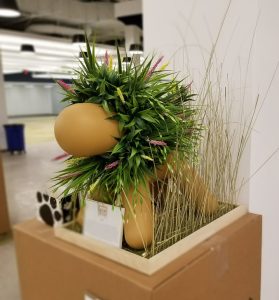
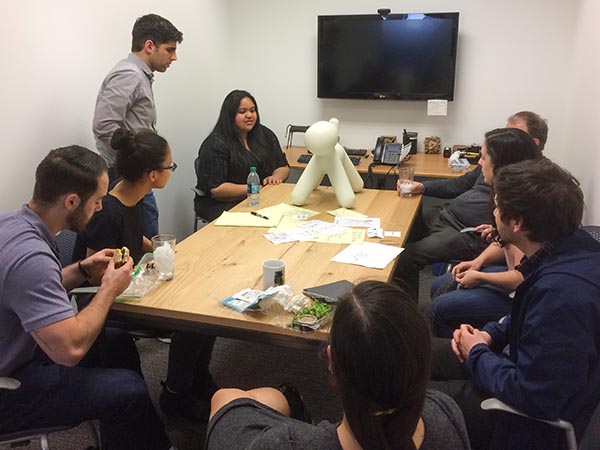
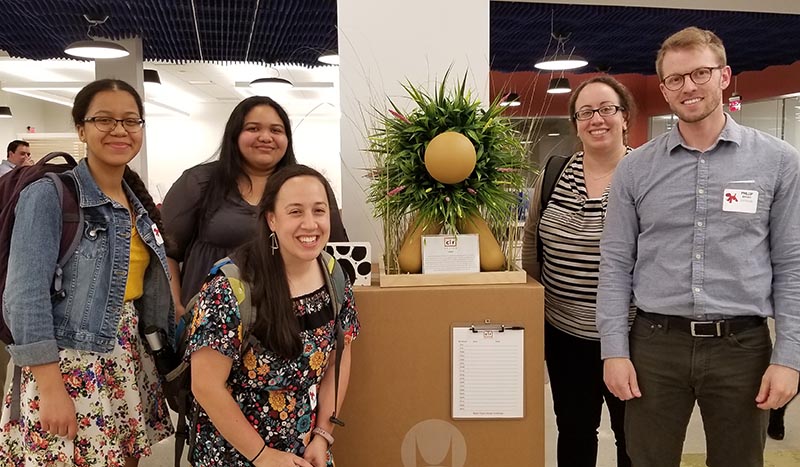
On May 1, 2019, a team from CLR Design entered “Lionel” into the 2nd Annual Magis Puppy Design Challenge. The interior design firm Premier provided several local design firms each with a Magis Puppy to use as a blank canvas. The decorated Puppies were then the center of a silent auction to raise money for PAWS (Philadelphia Animal Welfare Society). Not only did “Lionel” help raise money for local pups, he also had an additional conservation lesson:

One of the greatest threats to lion habitats and populations is habitat encroachment and human-wildlife conflict – farmers are killing lions to protect their livestock. In eastern Africa, wildlife organizations are raising and training puppies to give to local farmers as an alternative form of protection for their livestock. Livestock guardian dogs are known for their imposing physical presence, fierce bark, and loyal protective nature. Not only do they bond with and fiercely protect the herd, but they also save lions and other big cats by alleviating the pressure on farmers to kill them.


Filed Under: CLR Culture, Newsworthy

Gary Lee Receives Special AZA Award

August 29, 2019 by Dan Gregory

Gregg Hudson of Dallas Zoo presents the Wendy Fisher Award to Gary LeeOn Tuesday, September 12, 2017, the Association of Zoos & Aquariums (AZA) awarded its prestigious Wendy Fisher Award for Professional Excellence to veteran zoo designer Gary H. Lee. He is one of the world’s top experts in the field and is only the second architect to receive this honor since the award was established in 2004.

The zoos of today are a far cry from the caged menageries of a century ago, or the hard concrete enclosures of the mid-century. “The younger generation of zoo and aquarium professionals might take for granted the design of immersive and animal-welfare oriented exhibits they work in today,” according to Palmer “Satch” Krantz, the legendary director of the Riverbanks Zoo & Garden who nominated Lee. “They may not be aware of the profound and forward-thinking changes in zoo design which were ushered in by collaborative, even revolutionary teams of which Gary was often a part.”

Krantz said Lee also made major contributions to “the concepts of immersive habitat design, ethology-based design, flex-habitat design, wellness-inspired design and other trends which have made the zoos of today completely different than the zoos of the past.”

In speaking of Lee’s contribution to the field when presenting the award in Indianapolis during the AZA’s national conference, AZA Board member Gregg Hudson (President and CEO of Dallas Zoo) said, “He is on a constant quest to improve the model. The model for our visitors, for our animals, and for our profession. His impressive body of work has helped to shape the evolution of what today’s zoos are, and will have an impact many generations still to come.”

Filed Under: CLR Culture, Newsworthy

Making Connections for Life

October 28, 2012 by Dan Gregory

CLR Design is an award-winning architectural and landscape architectural firm focused on designing zoological spaces that inspire, educate, preserve and protect. With a solid theoretical and practical design foundation, and over 30 years of focused experience, we remain at the forefront of key innovations and trends that began with the advent of landscape immersion and now include activity-based design for animals, adventure education, campus ecology, sustainable design and revenue driven entry complexes.

Filed Under: Featured, Featured Video, home-news, Insights, Video

Protected: People (CLR Internal Information)

September 27, 2019 by Dan Gregory

This content is password-protected. To view it, please enter the password below.

Filed Under: Uncategorized

  • « Go to Previous Page
  • Page 1
  • Page 2
  • Page 3
Philadelphia, PA
833 Chestnut Street
Suite 909
19107  
Dana Point, CA
34232 Pacific Coast Highway, Suite B 92629  
info@clrdesign.com
215.564.0250
Join Our Email List